
Dental Implants for a Restored Smile in Bergen County
Dental Implants Presentation
To provide you with a better understanding of dental implants, we have provided the following multimedia presentation. Many common questions pertaining to dental implants are discussed.
What Are Dental Implants?
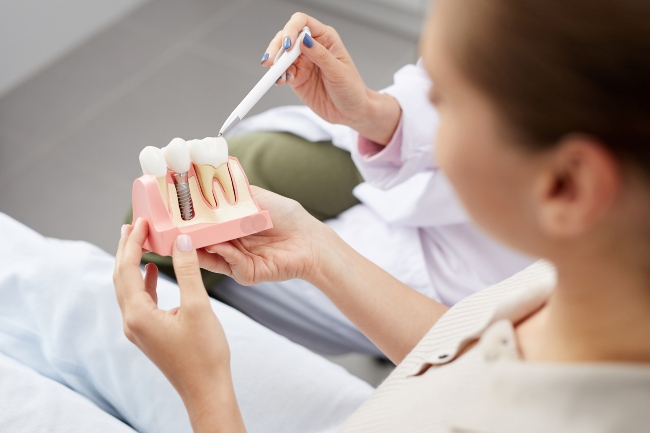
Dental implants are artificial tooth roots made of materials like titanium or zirconia that are surgically placed into the jawbone to support replacement teeth, such as crowns, bridges, or dentures. They are a widespread and long-lasting solution for people who have lost one or more teeth due to injury, decay, or other dental issues. The implant fuses with the jawbone over time in osseointegration, creating a stable foundation for the replacement tooth.
Dental implants look, feel, and function like natural teeth, making them a preferred option for restoring aesthetics and oral health for patients throughout Bergenfield, Englewood Cliffs, and Ho-Ho-Kus, NJ and the surrounding areas. Below, experts from Premier Oral Surgery Group explain dental implants, why they’re used, and the procedure involved. Contact us to learn more or schedule an in-office consultation.
Benefits of Permanent Dental Implants
Dental implants offer many benefits, making them a steady and popular choice for tooth replacement. Some key advantages include:
- Natural Look & Feel: Implants mimic the appearance and function of natural teeth, blending seamlessly with your existing smile.
- Durability & Longevity: Dental implants can last a lifetime with proper care, making them a cost-effective long-term solution.
- Improved Oral Health: Unlike bridges, implants don’t require altering adjacent teeth, preserving the health of surrounding natural teeth.
- Bone Preservation: Dental implants stimulate the jawbone, preventing bone loss that can occur following tooth loss.
- Enhanced Comfort: Since implants are securely anchored in the jawbone, they eliminate the discomfort and irritation often associated with removable dentures.
- Better Chewing & Speech: Implants restore full chewing ability and improve speech clarity, unlike dentures that may slip or cause difficulty.
- Boosted Confidence: A complete, natural-looking smile can enhance self-esteem and boost confidence in social and professional settings.
- Convenience: Unlike dentures, implants don’t require adhesives or unique cleaning routines, making them easier to maintain.
The Dental Implant Procedure
The process may take several months, but the result is a durable, natural-looking tooth replacement that can last a lifetime with proper care. Here’s an overview of the process:
- Assessment: The dentist or oral surgeon evaluates your oral health, takes X-rays or 3D scans, and reviews your medical history.
- Treatment Plan: A personalized plan is created, considering the number of implants needed and the condition of your jawbone.
- Tooth Extraction (if necessary): If the damaged tooth is still present, it will be removed before the implant process begins.
- Bone Grafting (if necessary): If your jawbone lacks sufficient density or volume, a bone graft may be performed to strengthen it. Healing from this step can take several months.
- Implant Placement The dental implant (a titanium or zirconia post) is surgically placed into the jawbone. This is done under local anesthesia or sedation for comfort.
- Healing Time: The implant fuses with the jawbone, which takes three to six months.
- Abutment Placement: Once the implant is securely integrated, an abutment (a connector piece) is attached. This step may require a minor surgical procedure.
- Crown Placement: After the gums heal around the abutment, a custom-made crown (artificial tooth) is attached. The crown is designed to match your natural teeth’ color, shape, and size.
- Follow-Up & Maintenance: Regular checkups are scheduled to ensure the implant functions well. Good oral hygiene and routine dental visits are essential for long-term success.
Ideal Candidates for Dental Implants
Ideal candidates for dental implants are individuals who meet the following criteria:
- Good Overall Health: Candidates should be generally healthy, as the procedure involves surgery and requires proper healing.
- Healthy Gums: Healthy gums support the implant and prevent complications like gum disease.
- Adequate Jawbone Density: A strong and sufficient jawbone is necessary to anchor the implant securely. If bone loss has occurred, bone grafting may be required.
- Non-smokers (or Willing to Quit): Smoking can interfere with healing and increase the risk of implant failure. Non-smokers or those willing to quit during the process are better candidates.
- No Uncontrolled Medical Conditions: Conditions like diabetes, heart disease, or autoimmune disorders should be well-managed, as they can affect healing and implant success.
- Good Oral Hygiene Habits: Candidates must commit to maintaining excellent oral hygiene and regular dental visits to ensure the longevity of the implant.
- Missing One or More Teeth: Dental implants are suitable for individuals missing a single tooth, multiple teeth, or even all teeth (with implant-supported dentures).
- Realistic Expectations: Candidates should understand the implant process’s timeline, costs, and maintenance.
Types of Full Dental Implants
The three most common types of dental implants used in the industry are endosteal, subperiosteal, and zygomatic. Endosteal is the most common and safe method used. Zygomatic is the most complicated. Learn more about the dental implant types below:
- Endosteum Implants – They are used to secure objects and resemble screws. They place something inside the jaw where the dentures will go. For patients to qualify, the post must be able to fuse to a healthy jawbone. When the wound heals, the artificial teeth can be attached to the implant to match the surrounding teeth.
- Subperiosteal Implants – Subperiosteal implants are surgically implanted outside of the jawbone. They sit above the bone but beneath the gums. False teeth are attached to poles that stem from the gums. Under the gum is a metal frame with a post. As the gum heals, the structure remains in place.
- Zygoma Implants – The implant is placed in the cheekbone rather than the patient’s jawbone.
Recovery & Aftercare for Dental Implants
Some simple recovery and implant aftercare tips to follow include:
- Oral hygiene: Brush and floss regularly to keep the implant and surrounding gums clean. Use a soft-bristled toothbrush and non-abrasive toothpaste to avoid irritation. Consider using an antimicrobial mouthwash to reduce bacteria.
- Diet: For the first few days after surgery, stick to soft foods (e.g., soups, yogurt, oatmeal, bananas, mashed potatoes). Avoid hard, sticky, or crunchy foods that could disturb the implant site during healing.
- Avoid smoking and alcohol: Smoking can delay healing and increase the risk of implant failure. Avoid alcohol for at least 72 hours after surgery, as it can interfere with healing.
- Protect the implant: Avoid grinding or clenching your teeth, as this can put pressure on the implant. If you play sports, wear a mouthguard to protect your teeth and dental implant.
- Follow-up appointments: Attend all scheduled checkups to monitor healing and ensure the implant integrates correctly. Your dentist may recommend professional cleanings more frequently during the healing period.
Why Choose Our Dental Implant Services?
Choosing Premier Oral Surgery means choosing excellence, compassion, and personalized care. Some additional reasons we’re trusted with professional dental care throughout the region include the following:
- Expertise: Our highly skilled dentists and specialists have years of experience in implant dentistry. We stay updated with the latest techniques and technologies to ensure the best possible outcomes for our patients.
- Personalized Care: We believe in treating each patient as an individual with unique needs and concerns. From your initial consultation to post-procedure care, we’ll work closely with you to develop a personalized treatment plan tailored to your specific goals and preferences.
- Superior Quality: Our dental implants are known for their exceptional quality and reliability. Made from durable materials and backed by decades of research, our dental implants offer long-lasting results and a natural-looking smile you can be proud of.
- Comfort and Convenience: We understand visiting the dentist can be stressful for some patients. That is why we go above and beyond to make the environment comfortable and friendly for everyone. From our friendly team to our modern office, we strive to make your experience with us as pleasant and stress-free as possible.
Contact Premier Oral Surgery for a Consultation
Our welcoming team at Premier Oral Surgery Group is available to address any inquiries and assist you in initiating the journey towards a healthy smile in Bergenfield, Englewood Cliffs, and Ho-Ho-Kus, NJ, and the surrounding areas. Contact us today for more information about our services and to schedule your appointment.
Frequently Asked Questions About Dental Implants
Below are some of the most frequently asked questions about dental implants and how we can help you meet your needs. Please get in touch with us today for more information or to schedule an appointment.
How Do I Care for My Dental Implants?
Maintaining your tooth restorations is just like caring for your natural teeth. Brush and floss daily, and visit our dentist for regular cleanings and checkups.
Are Dental Implants Permanent?
The dental implant post will fuse with your jawbone in a process called osseointegration and become a permanent part of your smile. The tooth restorations may become damaged or worn after long-term use but are easy to replace without further surgery.
Am I a Good Candidate for Dental Implants?
Our knowledgeable dental team will evaluate your oral condition and determine if you’re ready for a successful implant procedure designed to be a permanent solution. If your jawbones aren’t strong enough to bolster the implant post for the long term, we can provide bone grafting procedures to increase bone density and sinus augmentations to create enough room for the bone transplant. Additionally, your gums must be healthy to support dental implants. Our team can provide all necessary gum disease treatments to prepare you for a successful placement surgery.