
Wisdom Teeth Removal in Bergen County
At Premier Oral Surgery Group, we have three experienced oral surgeons on staff who can evaluate your wisdom teeth and determine if you need wisdom teeth removal. We offer wisdom teeth removal in Bergenfield, Englewood Cliffs, and Ho-Ho-Kus, NJ, at our comfortable, state-of-the-art oral surgery offices. Our oral surgeons and staff will do everything possible to ease your anxiety and minimize your discomfort to ensure your wisdom teeth removal experience is as stress-free as possible.
Who Needs Wisdom Teeth Removal?
Some people develop discomfort or alignment issues as their wisdom teeth come in because their jaw isn’t large enough to support additional teeth. If your wisdom teeth don’t have enough space to fully come in, you may develop complications that affect your oral and physical health, including:
- Impaction – If there isn’t enough room for your wisdom teeth to come in, they may become impacted. This means they become partly or fully trapped in the gums or jawbone. Impacted wisdom teeth can cause pain, swelling, tenderness, bleeding, trouble eating, and infection.
- Infection – Impacted wisdom teeth can cause pericoronitis, a localized gum infection. The gum tissue around the wisdom tooth can become irritated and infected, causing pain, swelling, and problems with chewing and/or swallowing.
- Cysts – An impacted wisdom tooth can also cause cysts to develop. Cysts are fluid-filled “balloons” inside the jawbone that develop as a result of impacted teeth and slowly expand, destroying the adjacent jawbone and occasionally teeth. They can be very difficult to treat if your wisdom teeth are not removed in your teenage years. Although rare, tumors can be associated with the delayed removal of wisdom teeth.
- Overcrowding – Impacted wisdom teeth may contribute to overcrowding of your teeth. This is most noticeable with the front teeth, primarily the lower front teeth, and is most commonly seen after a patient has had braces. There are several factors that cause teeth to crowd after braces or in early adulthood. Retained, impacted wisdom teeth may be a contributing factor. Unless you have an active problem when you see the oral surgeon, the reason for removal is primarily to prevent long-term damage to your teeth, gums, and jawbone.
- Misalignment or Malocclusion – If you don’t have enough room in your jaw for your wisdom teeth to fully erupt, they can put pressure on your surrounding teeth and your jaw. This can cause misalignment or malocclusion, which can cause pain and trouble eating and speaking.
- Damage to Surrounding Teeth – Wisdom teeth can overcrowd your mouth and make it harder to complete a consistent oral hygiene routine. This can increase your risk of gum disease, tooth decay, infection, dental abscess, and gum disease. When wisdom teeth come in, they can also damage the surrounding teeth or bone.
What to Expect Before & After Wisdom Teeth Removal

If your general dentist or orthodontist notices issues with your wisdom teeth, they may refer you to our office for a consultation. We will begin by performing a thorough examination of your mouth and teeth and taking dental x-rays to assess the situation. We will evaluate the position of the wisdom teeth and determine if there are existing issues or the potential for future problems. If we determine you need wisdom teeth removal, we will explain the procedure to you in full and answer any of your questions. We will also provide you with personalized instructions for before and after wisdom teeth removal, as well as prescriptions for pain medication and antibiotics.
On the day of your procedure, you should have someone drive you to and from our office. You should not eat anything for at least six hours before your surgery. We will administer local and general anesthesia to maximize your comfort. We may also have you take medication to reduce the risk of infection, swelling, and discomfort. Wisdom teeth removal usually takes between 30-60 minutes, and your entire visit may take around 90 minutes.
Wisdom Teeth Removal Recovery & Healing
If we placed stitches during your surgery, they will dissolve in three to five days. You may notice that your gums feel swollen or tender. When your anesthesia wears off, you may feel nauseated and may experience pain or discomfort. You should take your pain medication as recommended. We will give you personalized aftercare instructions that improve the wisdom teeth removal healing process. You should follow these instructions carefully and call us if you notice any problems. Most people start to feel better within 24-72 hours of their surgery. The most common wisdom teeth removal side effects are pain, swelling, and gum tenderness.
What Does Wisdom Tooth Removal Cost & Is It Covered by Insurance?
The fee for your treatment is determined by a number of factors. These may include the difficulty involved in removing your teeth and which type of anesthesia is best for you. During your consultation, your oral surgeon will review your x-rays, complete an examination, and determine the best option for anesthesia before an accurate estimate can be provided. Every insurance company has a different policy regarding the extent of coverage for a given surgical procedure. The oral surgeon’s office staff will help you obtain maximum insurance coverage for your treatment.
What if I Have Questions Before My Surgery?
At the time of your consultation, your specific situation will be discussed in greater detail. We encourage you to ask any questions you may have. If new questions arise after your consultation, please call our Englewood Cliffs office to speak to one of our patient care coordinators.
Schedule a Consultation for Wisdom Teeth Removal
If you have been referred to Premier Oral Surgery Group for wisdom teeth removal in Bergenfield, Englewood Cliffs, and Ho-Ho-Kus, NJ, call or contact us online to schedule a consultation. We will evaluate your teeth, gums, and jaw and determine if you need wisdom teeth removal. We will also answer any questions you have and make sure you fully understand what to expect before and after wisdom teeth removal. Our skilled, compassionate staff are committed to personalized patient care and providing personalized solutions for wisdom teeth complications.
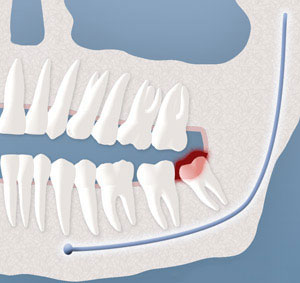
Infection:
The most frequent clinical problem we see is pericoronitis, (a localized gum infection). Without enough room for total eruption, the gum tissue around the wisdom tooth can become irritated and infected, resulting in recurrent pain, swelling, and problems with chewing and/or swallowing.
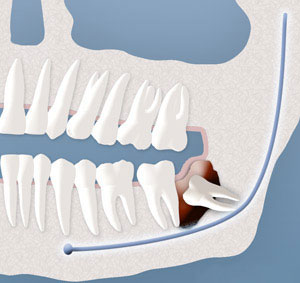
Cyst Formation:
Non-infectious diseases may also arise in association with an impacted wisdom tooth. Cysts are fluid-filled “balloons” inside the jaw bone that develop as a result of impacted teeth and slowly expand destroying adjacent jaw bone and occasionally teeth. They can be very difficult to treat if your wisdom teeth are not removed in your teenage years. Although rare, tumors can be associated with the delayed removal of wisdom teeth.
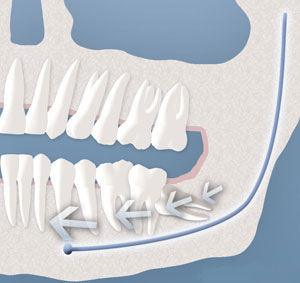
Possible Crowding:
Impacted wisdom teeth may contribute to crowding of your teeth. This is most noticeable with the front teeth, primarily the lower front teeth and is most commonly seen after a patient has had braces. There are a number of factors that cause teeth to crowd after braces or in early adulthood. Retained, impacted wisdom teeth may be a contributing factor. Unless you have an active problem when you see the oral surgeon, the reason for removal is primarily to prevent long-term damage to your teeth, gums and jaw bone.
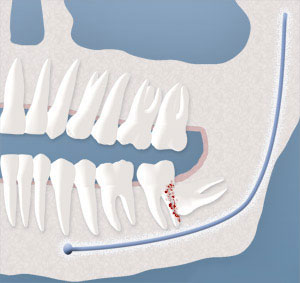
Damage to Adjacent Teeth:
If there is inadequate room to clean around the wisdom tooth, the tooth directly in front, the second molar, can be adversely affected resulting in gum disease, bone loss around the tooth, and/or decay.