
Anesthesia Options for Oral Surgery: Nitrous Oxide, IV Sedation, and General
If you’ve ever had oral surgery recommended, chances are your first question wasn’t about the procedure itself. It was probably something simpler: how will this feel? That’s usually where the real concern sits. Not the clinical side, but the experience of it.
At Premier Oral and Maxillofacial Surgery Group, that question comes up all the time, and it’s a fair one. The short answer is that there isn’t just one way to handle it. There are a few anesthesia options for oral surgery, and each one changes the experience in a different way.
Every procedure starts with a local anesthetic. That part doesn’t change. It numbs the area so you don’t feel pain during the procedure. From there, the decision becomes whether you need something more to help you stay relaxed.
In this blog, we will walk you through the range of anesthetic options available to you and how to choose the most appropriate one for oral surgery.
How Oral Surgeons Decide Which Anesthesia Option Fits
There isn’t a one-size-fits-all answer here. The type of procedure matters, but so does how you personally handle situations like this. A shorter, more straightforward treatment might not require much beyond numbing the area. Something more involved, like implants or wisdom teeth removal, often calls for a different approach.
Then there’s the human side of it. Some people are okay with being aware of what’s happening. Others would rather not be. There’s no right or wrong preference. It’s just part of the decision.
At Premier Oral, the recommendation usually comes from looking at both sides together. What needs to be done, and what will make the experience feel manageable for you.
Nitrous Oxide: A Lighter Option That Helps Patients Relax
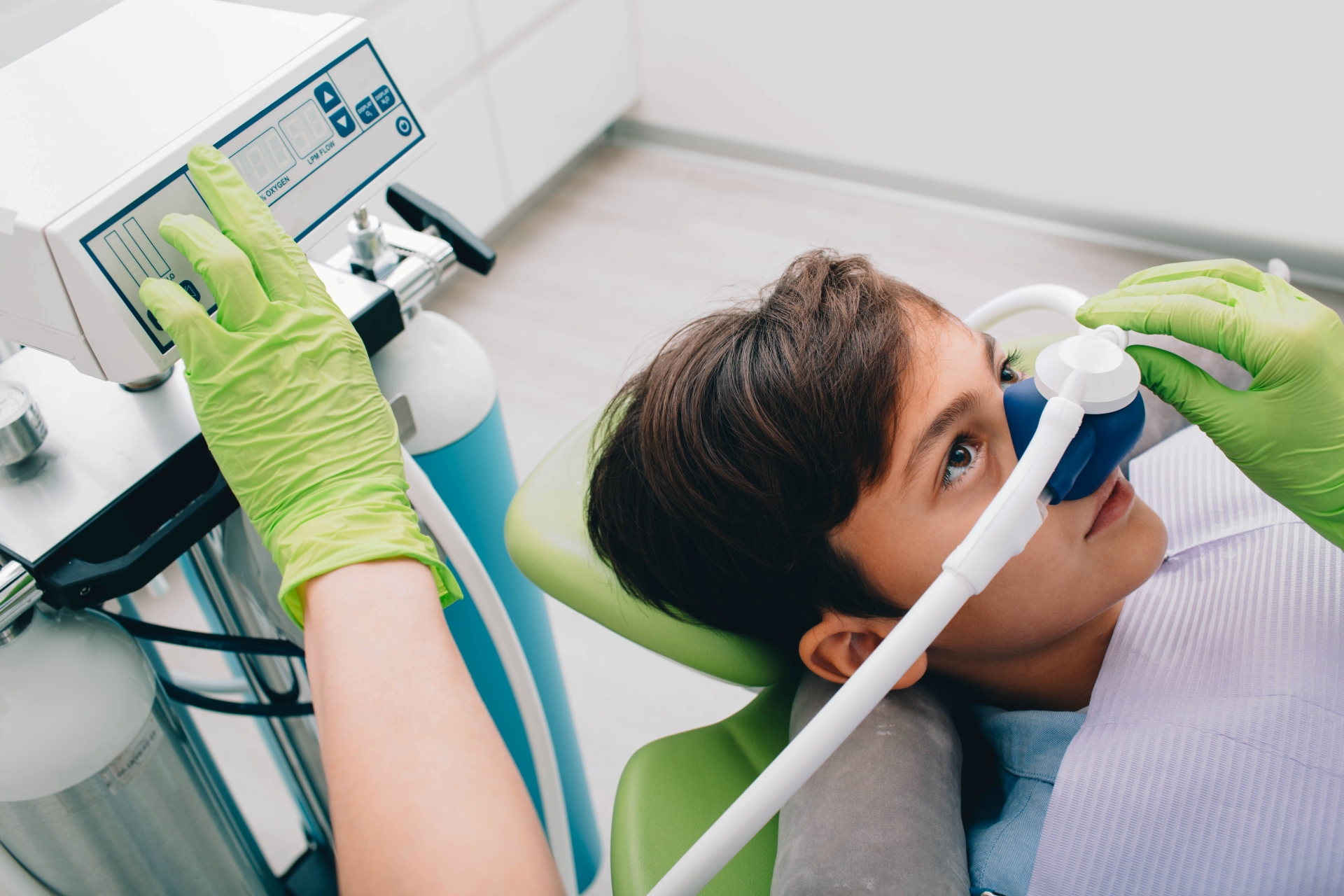
Nitrous oxide is often the easiest place to start. Most people know it as laughing gas, but it has more varied uses. It’s given through a small mask, and it works fairly quickly.
You don’t fall asleep. You’re still aware of what’s going on, but things feel a little more distant and a little less sharp. For some people, that’s enough.
Nitrous oxide oral surgery is usually a good fit if the main issue is mild anxiety. It takes the edge off without changing things too dramatically. One of the reasons people choose it is because it doesn’t linger. Once the mask comes off, the effects fade pretty quickly.
It’s simple, and for the right situation, that simplicity works well.
IV Sedation: Deep Relaxation Without Full Unconsciousness
IV sedation is different. It’s not just about taking the edge off. It creates a deeper sense of calm. The medication is given through a vein, and it works almost right away. Most people don’t feel fully asleep, but they’re not really tuned in either. It’s more like drifting. Time passes without much awareness of it.
Afterward, it’s common not to remember much of the procedure. That’s often what people are looking for when they choose this option. This type of sedation dentistry is usually recommended when the procedure takes longer or when staying relaxed the whole time might otherwise be difficult. It allows everything to move along without interruption while you remain comfortable.
General Anesthesia: When Complete Unconsciousness May Be Recommended
General anesthesia is the most complete form of sedation. You’re fully asleep. There’s no awareness of the procedure at all.
This isn’t used in every case. It’s usually reserved for more complex procedures or situations where other options wouldn’t be enough. Sometimes it’s also the better choice when anxiety is particularly strong.
It’s handled with a higher level of monitoring, and everything is carefully controlled throughout. When it’s recommended, it’s because it genuinely fits the situation.
Comparing Nitrous Oxide, IV Sedation, and General Anesthesia
The differences between these options are easier to understand when you think about how aware you are during the procedure.
With nitrous oxide oral surgery, you’re awake but relaxed. With IV sedation, you’re in a deeper, more detached state and may not remember much. With general anesthesia, you’re fully asleep.
Recovery also varies by option. Nitrous oxide wears off quickly. IV sedation takes a bit longer, and you’ll likely feel drowsy afterward. General anesthesia requires more time to fully shake off.
None of these is automatically better than the others. They just serve different purposes.
Safety, Monitoring, and Preparation Before Surgery

No matter which option is used, safety is always the starting point. Before anything happens, your medical history is reviewed, along with any medications you’re taking.
During procedures that involve deeper sedation, your vital signs are monitored the entire time. That includes things like heart rate, oxygen levels, and breathing. It’s all there to make sure everything stays steady.
There are also a few simple things you’ll be asked to do beforehand. Following instructions about eating, wearing comfortable clothing, and arranging a ride home if needed. They’re small steps, but they make a difference.
At Premier Oral, anesthesia options are applied after a thorough evaluation of your personal needs to ensure your experience and recovery are seamless.
FAQs
What are the main anesthesia options for oral surgery?
People often ask what the main anesthesia options for oral surgery are. In most cases, it comes down to local anesthetic, nitrous oxide, IV sedation, and general anesthesia.
Is nitrous oxide enough for wisdom teeth?
Another common question is whether nitrous oxide oral surgery is enough for procedures like wisdom teeth removal or implants. Sometimes it is, depending on the situation.
How is IV sedation different from general anesthesia?
There’s also the question of how IV sedation compares to general anesthesia. The main difference is awareness. With IV sedation, you’re deeply relaxed but still breathing on your own. With general anesthesia, you’re completely unconscious.
Who benefits most from sedation dentistry?
Sedation dentistry is often helpful for those who feel anxious, have a strong gag reflex, or find it difficult to sit still for longer procedures. The decision is always discussed openly so that it feels clear and comfortable.
The Right Anesthesia Option Fits You
There isn’t a single answer that works for everyone. The best option is the one that fits both the procedure and the person going through it.
At Premier Oral and Maxillofacial Surgery Group, the focus is on making sure that the fit is right. Not just clinically, but from a comfort standpoint too. If you’re unsure which direction makes sense for you, that’s okay. Our expert team is here to guide you every step of the way.
Schedule a consultation with Premier Oral to go over your procedure and figure out which approach feels right for you.
Comments are closed.