
What Happens During a Surgical Tooth Extraction
When they hear “surgical,” most patients picture something far more dramatic than what the process actually involves, and that gap between expectation and reality is where most of the worry comes from.
This blog walks through what the procedure actually means, how the visit is structured, what to expect during and right after a surgery, and what recovery looks like, so you know what you are walking into well before you get there.
What Makes a Tooth Extraction “Surgical” Instead of Simple
Not every extraction follows the same path. A simple extraction involves a tooth that sits above the gumline, which standard instruments can handle. A surgical tooth extraction is recommended when that approach is not enough.
A surgical tooth extraction is usually recommended when a tooth is broken at or below the gumline, if a tooth is impacted or partially erupted, or if the roots are curved or angled in a way that requires more careful access. It may also be recommended when the surrounding bone or gum tissues need a safer removal.
The surgeon always recommends what the case genuinely requires, nothing more involved than what the situation warrants.
Before the Procedure: Evaluation, Imaging, and Treatment Planning
The extraction does not begin at the chair. It begins with understanding exactly what the tooth looks like and what the surrounding anatomy requires.
A clinical exam covers tooth condition, gum tissue, and bite alignment. Imaging then fills in the finer details, root shape, bone density, and how close the tooth sits to nearby nerves. At Premier Oral and Maxillofacial Surgery Group, advanced 3D imaging captures that picture with a precision that makes the treatment plan more accurate and the procedure more predictable. Pre-procedure instructions on eating, medications, and transportation are reviewed well before the appointment day itself to provide a seamless experience.
Anesthesia and Comfort: How Oral Surgeons Help Patients Feel More At Ease
Comfort and patient safety shape every decision we make before the procedure starts. Anesthesia options vary based on case complexity, tooth position, and what the surgeon determines is most appropriate for the individual patient.
Before anything begins, our team walks through the full plan and answers any questions you have. At Premier Oral and Maxillofacial Surgery Group, every patient should feel genuinely informed going into that appointment, not uncertain about what will happen next.
What Happens During a Surgical Tooth Extraction: Step-by-Step Overview
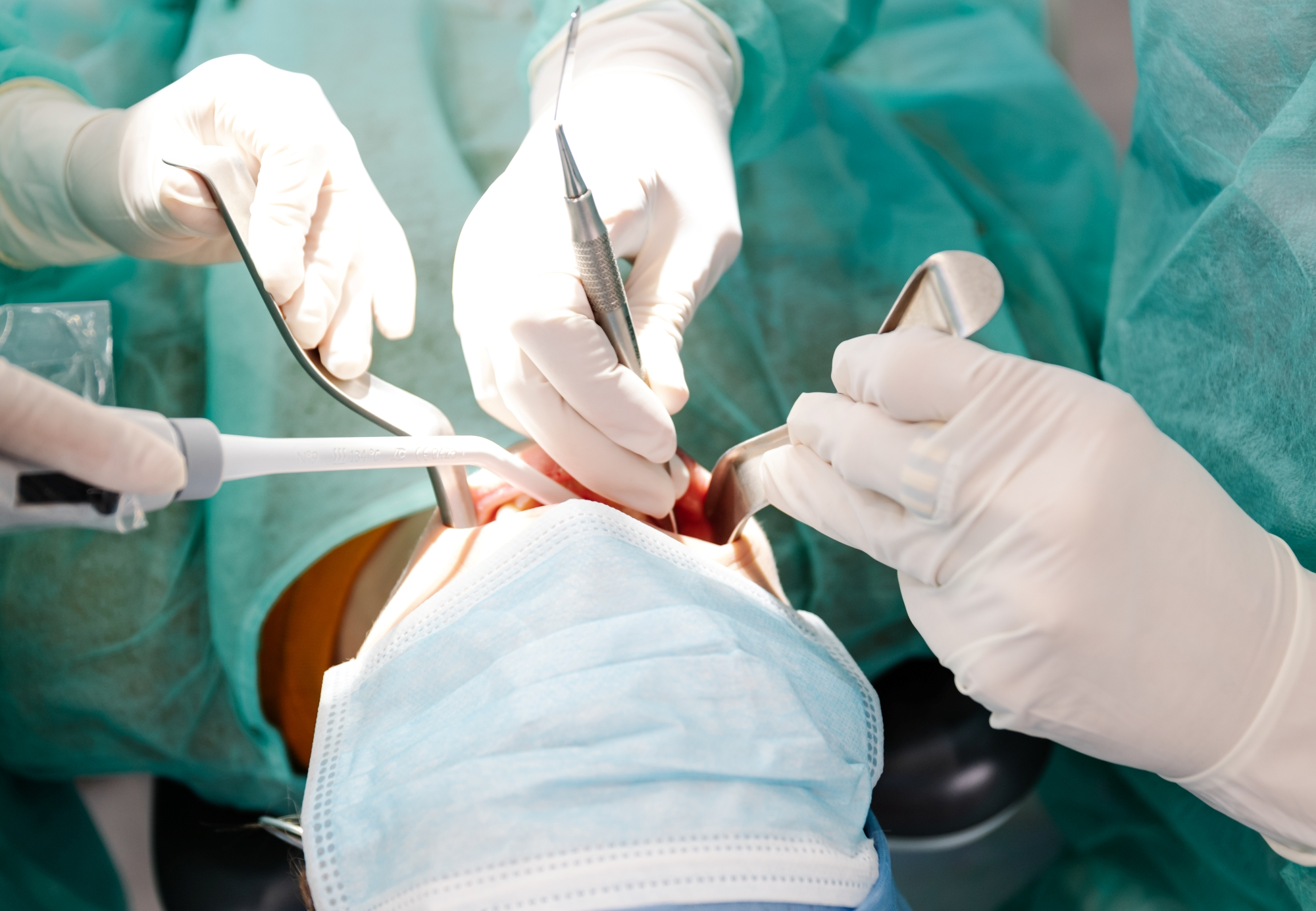
The exact steps vary by tooth position and case complexity, but the process follows a careful, consistent sequence throughout.
Here is what the procedure typically involves:
- The area is fully numbed and prepared before anything else proceeds
- Access is created through gum tissue or bone, where the tooth position requires it
- The tooth is carefully loosened and, in some cases, divided into sections for safer removal
- The site is cleaned and inspected thoroughly once the tooth is out
- The area is closed or protected in the way that best supports healing
Every step reflects the imaging and planning done beforehand, with minimal disruption to surrounding tissue as the consistent priority.
When Impacted Teeth Make the Procedure More Involved
An impacted tooth cannot come through normally because it is stuck under the gum, blocked by bone, or crowded by a neighboring tooth. In plain terms, it is trying to erupt but has no clear path to do so.
These cases require more access and more detailed surgical planning than a straightforward removal. The tooth might sit partially under gum tissue, be fully enclosed in bone, or press against an adjacent root at an awkward angle. Wisdom teeth are the most familiar example, though impaction varies by patient anatomy. Imaging plays a central role in mapping out exactly what the approach needs to account for before a single step begins.
Right After the Procedure: What Patients Usually Notice Before Going Home
Once the procedure is complete, a few things are entirely expected before you leave. The area will feel numb; gauze goes over the site, and some tenderness and mild swelling are normal as the anesthesia wears off.
You will be guided every step of the way as we walk you through post-operative instructions before discharge, covering bleeding management, activity limits, eating guidance, and follow-up timing. If anything feels unclear before you walk out, that is exactly the right moment to raise it. Our team ensures your comfort so you don’t have to worry later.
Recovery and Healing: What Helps the Site Heal Well
Recovery comes down to two things running alongside each other: managing comfort and protecting the extraction site while it heals. Following post-operative instructions closely is the single most effective thing a patient can do.
Here are some helpful habits to support your recovery:
- Rest as directed, especially during those first one or two days.
- Enjoy soft foods and keep yourself well-hydrated as you heal.
- Gently keep the area clean following your surgeon’s specific instructions.
- Steer clear of anything that might disturb or irritate the healing site.
If your symptoms seem to get worse instead of better, don’t hesitate to contact your surgeon. Healing timelines vary by tooth, complexity, and individual factors. Follow-up visits allow our team to confirm that things are progressing as they should.
FAQs: Common Questions About Surgical Extractions
How is a surgical extraction different from a regular one?
A simple extraction removes a fully visible tooth with standard instruments. Surgical extraction is used for teeth that are impacted, fractured below the gumline, or require more precise access than a routine approach allows.
Will I be awake during the procedure?
That depends on the anesthesia plan discussed before your appointment. Your surgeon recommends what is safest and most appropriate for your specific situation.
How long does impacted tooth surgery usually take?
It varies based on tooth position and complexity. Your surgeon will give you a realistic timeframe during the consultation so you can plan your day around it.
When should I call the oral surgeon during recovery?
If pain worsens rather than improves, swelling increases beyond the first couple of days, or something looks or feels off, call the office rather than waiting it out.
Knowing the Process Can Make Treatment Feel Less Overwhelming

Surgical tooth extractions are planned carefully from start to finish, with safety, comfort, and recovery shaping every decision along the way. Understanding what happens before, during, and after removes much of the uncertainty, and that clarity alone tends to make an unfamiliar experience feel far less daunting. Our team at Premier Oral and Maxillofacial Surgery Group, with its patient-first approach, will ensure you feel fully prepared for treatment day
Schedule a consultation with Premier Oral and Maxillofacial Surgery Group to discuss your tooth, treatment options, and what to expect during a surgical tooth extraction based on your specific case.
Comments are closed.