
How To Choose The Best Surgeon For Dental Implants: Credentials, Experience, And Questions That Matter
Choosing a surgeon for dental implants is an important decision, especially when you are comparing providers and trying to understand which one fits your specific needs. Credentials matter, but so do surgical experience, treatment planning, communication, and the surgeon’s familiarity with cases like yours. A consultation should give you a clear picture of your options and help you understand what to expect before treatment begins.
Dental implant treatment can involve more than placing an artificial tooth root. Your bone structure, gum tissue, nearby teeth, medical history, and final restoration can all influence the treatment plan. The right surgeon should be able to evaluate these factors, explain them clearly, and work with you on a plan that fits your situation.
In this blog, we’ll cover the credentials to look for, how experience and technology factor into implant care, questions to ask during your consultation, and how to compare surgeons with confidence.
The Right Implant Surgeon Can Shape The Whole Experience
Choosing someone for dental implant surgery can feel daunting. Many patients begin by searching for the “best doctor for dental implants” and then find page after page of names. The goal is not to find one person who is “best” for everyone. It is to find a surgeon whose training, experience, communication style, and approach fit your needs.
Dental implants involve more than replacing a missing tooth. Bone, gum tissue, nearby teeth, your medical history, and the final restoration all play a part. At Premier Oral, we help our patients understand those factors before treatment begins.
Why Dental Implant Surgery is Different From Routine Dental Care
An implant acts as an artificial tooth root when placed in the jawbone. In this regard, surgical planning is essential. Key considerations include bone volume, nerve and sinus location, and periodontal status.
You may need tooth extraction, bone grafting, sinus lift surgery, and other preparatory procedures before placing an implant. This is one reason why dental implants require a more comprehensive examination than traditional dentistry.
Oral Surgeon, Dentist, or Implant Provider: What is The Difference?
A general dentist may place or restore implants depending on training and experience. An oral and maxillofacial surgeon has advanced surgical training involving the mouth, jaws, facial structures, bone, and soft tissue.
A dentist who does dental implants can be a good choice for some straightforward cases. More complex situations, such as significant bone loss, failed implants, sinus concerns, or multiple missing teeth, may call for a surgical specialist.
Credentials to Look for Before Choosing an Implant Surgeon
Credentials give you a useful starting point when comparing implant surgeons. Look at the surgeon’s education, oral and maxillofacial surgery residency, licensure, board certification, and professional memberships. Also ask about continuing education, implant-specific training, and anesthesia experience.
When comparing dental implant doctors near you, look beyond location alone. A convenient office is helpful, but the surgeon’s training and qualifications should also give you confidence in the care you are considering. Ask about the experience and training that apply specifically to your planned treatment, so you can make a decision based on more than proximity
Technology and Imaging: Why A 3D View Matters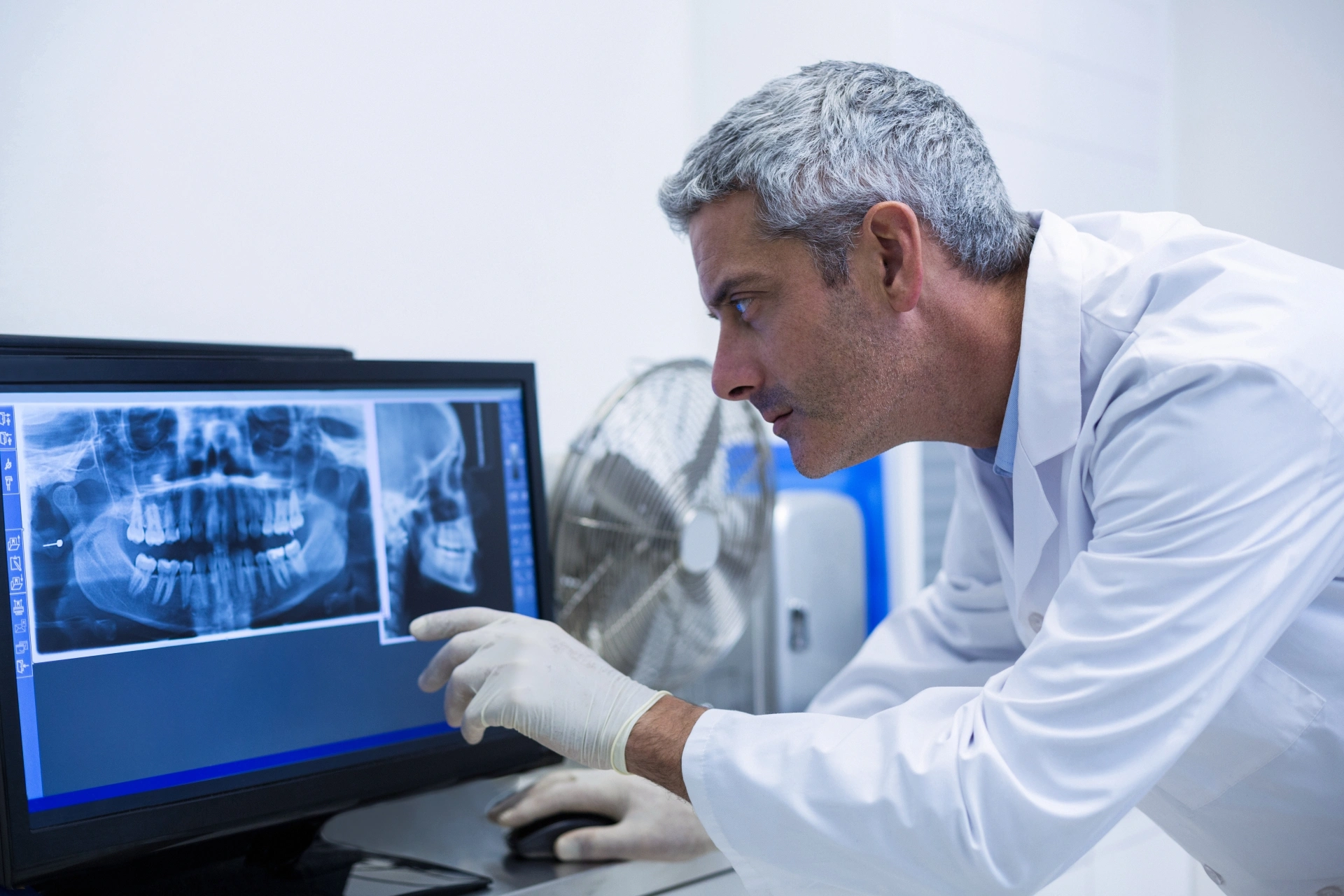
Imaging can play an important role in planning dental implant treatment. A 3-D CBCT scan can give the surgeon a more detailed view of the jaw than a standard dental X-ray, helping them assess the available bone, the location of nearby nerves and sinuses, and other factors that may affect implant placement. Treatment planning software can then help the surgeon evaluate the planned implant position and angulation.
If you’re looking for a “good oral surgeon near me,” ask what imaging they use during planning and how the results will guide your treatment. Understanding how your images are evaluated can also make it easier to follow the reasoning behind your recommended treatment plan.
Anesthesia Should Be Part of The Conversation
Anesthesia and sedation are important parts of your dental implant treatment plan. Implant surgery may be performed with local anesthesia, while some patients may benefit from sedation depending on their anxiety level, health history, the number of implants being placed, and the complexity of the procedure.
When comparing “dental implant doctors near me,” ask which anesthesia and sedation options are available and which may be appropriate for your procedure. It is also helpful to understand how you will be monitored during treatment and whether you will need someone to drive you home afterward. Having these details explained before surgery can help you feel prepared for the appointment.
The Consultation: Questions That Tell You a Lot
A consultation should leave you with a clear understanding of your treatment plan and what to expect next. Your surgeon should explain your diagnosis, review your imaging with you, and discuss the potential benefits, risks, and steps involved in the procedure.
If you have been searching for “reputable oral surgeons near me,” the consultation is a good opportunity to look beyond credentials and get a feel for how the surgeon approaches your care. Ask whether you are a good candidate for implants, whether you may need bone grafting or a sinus lift, what imaging will be used, and how many visits your treatment may involve. You can also ask about anesthesia options, recovery, and what may happen if you decide to wait.
It is also worth asking who will place the final crown, bridge, or denture and how the surgical and restorative providers will coordinate your care. A surgeon who takes the time to answer your questions clearly can help you leave the consultation with a better understanding of your options and next steps.
FAQs
How do I choose the best doctor for dental implants?
Think about surgical training, implant experience, three-dimensional imaging, communication ability, anesthesia choices, and grafting knowledge if needed.
How do I compare dental implant doctors near me?
Compare credentials, case experience, imaging, treatment planning, anesthesia, recovery guidance, and coordination with your restorative dentist.
What does specialist dental implants mean?
The phrase generally refers to implant care involving a dental specialist with advanced surgical training in implant placement and related procedures.
Should I choose good oral surgeons near me or a general dentist?
It depends on your case. A general dentist may handle some implant treatment, while an oral surgeon may be a better fit for complex surgical needs.
Can a dentist who does dental implants place my implant?
Some can, depending on their training and experience. Ask about surgical experience, imaging, and how they handle complications or more complex cases.
Choose The Surgeon Who Gives You Clarity
Picking an implant surgeon is not as much about looking for a promise as it is about working with someone who knows your body and explains to you what options you have and what plans are necessary.
Premier Oral and Maxillofacial Surgery brings all these elements together in one package to help you move forward with confidence. Book a consultation with us for patient-centered care and surgical expertise.
Comments are closed.