
Is a Maxillofacial Surgeon a Dentist or a Doctor?
Yes, a maxillofacial surgeon is a dentist first. They earn a dental degree (DDS or DMD), then complete several years of hospital-based surgical residency. Some also earn a medical degree (MD). The most accurate answer is that a maxillofacial surgeon is a surgical specialist who began as a dentist, and in some cases is a physician as well.
How does someone become a maxillofacial surgeon?
The path has three main stages:
- Dental school. Four years of training that ends in a DDS (Doctor of Dental Surgery) or DMD (Doctor of Dental Medicine) degree.
- Surgical residency. A hospital-based residency in oral and maxillofacial surgery, typically four to six years, with rotations that can include general surgery, anesthesia and emergency care.
- Board certification. Many surgeons go on to pass the specialty board examination. It is voluntary, but it is a useful sign of verified training.
That is a longer and more surgical road than general dentistry, which is why dentists often send complex cases to a specialist. For a closer look at how the two roles differ day to day, see our guide to oral surgeon vs dentist. If the word itself is new to you, we also explain what maxillofacial means.

Is a DDS different from a DMD?
No. DDS and DMD are the same level of dental degree. Which one a graduate receives depends on what the university calls it.
When is a maxillofacial surgeon also a medical doctor?
Some residency programs integrate a medical degree, and some surgeons earn an MD in addition to their dental degree. It is not required to practice the specialty, but it adds broader medical training. At Premier, Dr. Tyler Zenga holds both a DDS and an MD.
Does it matter whether your surgeon is called a dentist or a doctor?
For most patients, what matters is the surgical training behind the title. An oral and maxillofacial surgeon is trained to remove impacted teeth, place implants, correct jaw problems, treat facial injuries and provide anesthesia in the office. Those are the usual reasons a dentist sends someone to a specialist. You can read more about wisdom teeth, dental implants and jaw surgery.
Not sure whether your situation needs a specialist? Our guide on whether you need an oral surgeon or your dentist walks through it.
How can you check a surgeon’s credentials?
Ask these four questions before any surgery:
- What degree or degrees do you hold, and where did you train?
- Did you complete a residency in oral and maxillofacial surgery?
- Are you board certified?
- Which hospitals do you work with?
You can also confirm that a license is active through the New Jersey state dental board.
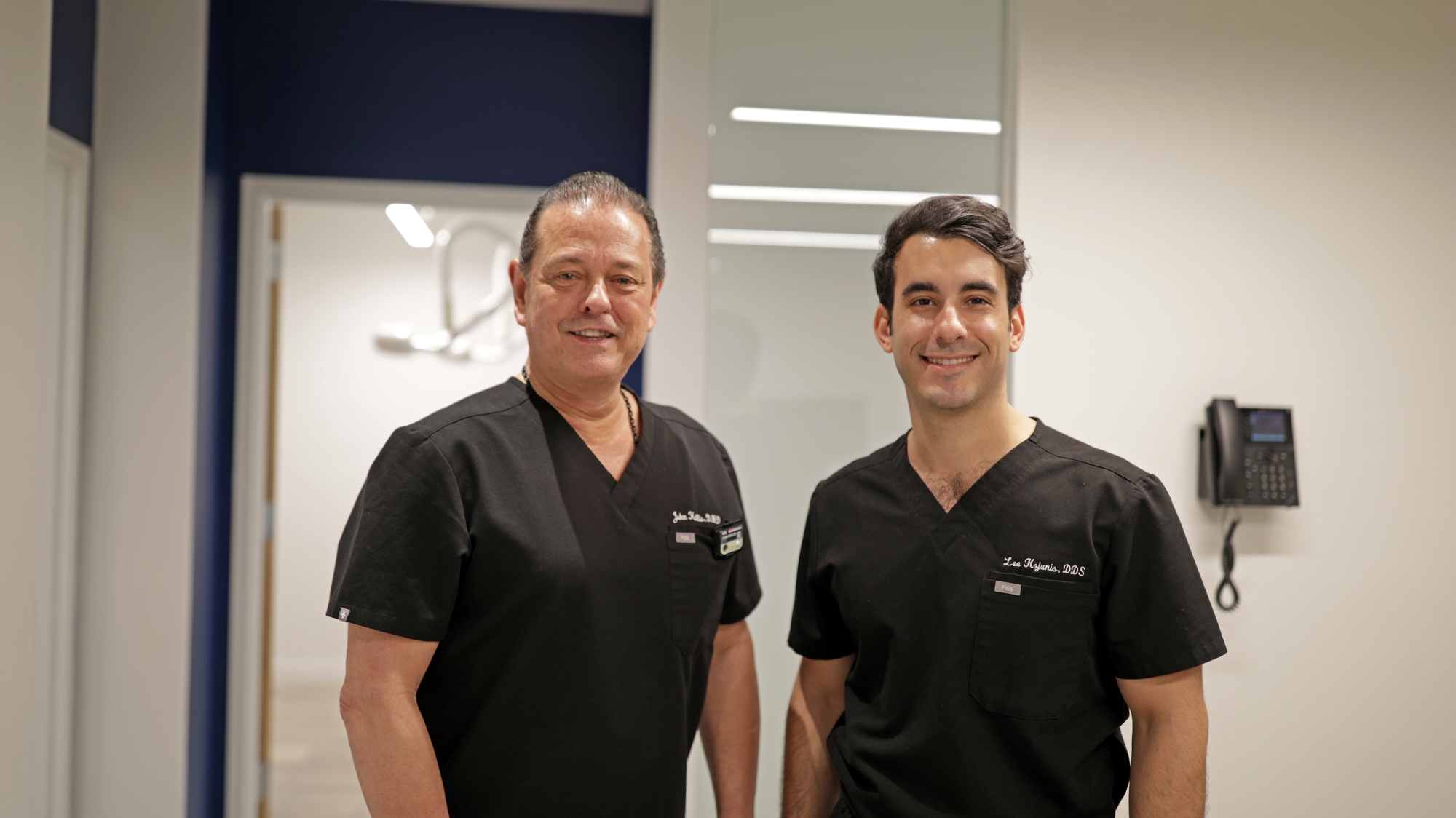
Meet the surgeons at Premier Oral + Maxillofacial Surgery
- Dr. Lee Kojanis, DDS is Section Chief of the Department of Oral + Maxillofacial Surgery at Englewood Hospital.
- Dr. Tyler Zenga, DDS MD is a dual degree oral and maxillofacial surgeon and physician.
- Dr. John Kallis, DMD has about 25 years of experience in the specialty.
Have a question about your care? Contact one of our three Bergen County offices in Englewood Cliffs, Bergenfield or Ho-Ho-Kus.
Frequently asked questions
Is an oral surgeon the same as a maxillofacial surgeon?
In everyday use, yes. The formal specialty name is oral and maxillofacial surgery, and the surgeons are often just called oral surgeons. Our overview of what maxillofacial surgery is covers the full scope.
Is a maxillofacial surgeon a medical doctor?
Not always. All are dentists first. Some also hold an MD, as described above.
Can a general dentist do oral surgery?
Many general dentists perform simple extractions. More complex surgery, such as impacted wisdom teeth, bone grafting or jaw surgery, is usually referred to an oral and maxillofacial surgeon.
Comments are closed.