
Do I Need an Oral Surgeon or Can My Dentist Do It?
See your dentist for routine care and simple procedures. See an oral surgeon when the problem is surgical, complex, or involves the jaw, facial bones or bone grafting. If you are unsure, your dentist can usually tell you after an exam and X-rays, and many will refer you directly.
When do you need an oral surgeon?
These situations usually point to an oral and maxillofacial surgeon:
- Impacted or painful wisdom teeth. Teeth stuck under the gum or growing at an angle often need surgical removal. See our page on impacted wisdom teeth.
- A tooth that needs a surgical extraction. Broken, deeply rooted or fused teeth are different from a simple extraction. Learn the difference in simple extraction vs surgical extraction.
- Missing teeth and dental implants. Implants are a surgical procedure, and some need bone grafting first. See dental implants.
- A tooth that will not come in. Impacted canines and other teeth may need to be uncovered so an orthodontist can guide them into place. See exposure of impacted teeth.
- Jaw problems. A misaligned bite, a jaw that sits unevenly, or ongoing pain and clicking may call for jaw surgery or TMJ treatment.
- Facial injury. Broken jaws and facial bones are treated as facial trauma.
- A sore, lump or patch that does not heal. Changes in the mouth that last more than two weeks should be checked. Our guide to early signs of oral pathology explains what to look for.
- You want sedation. Oral surgeons provide I.V. sedation in the office for anxious patients and longer procedures.
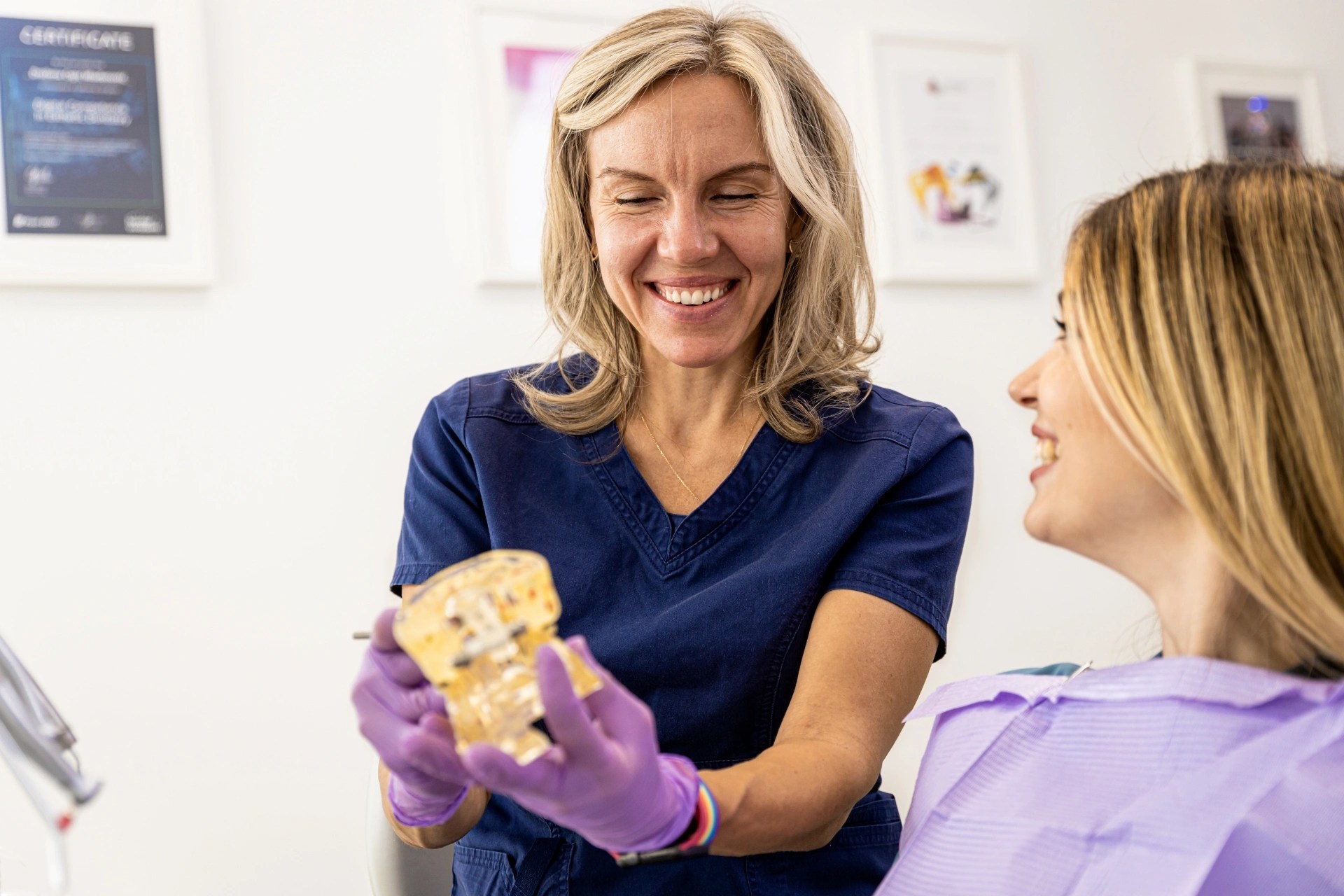
What can your dentist usually handle?
- Exams, cleanings and X-rays
- Fillings, crowns and root canals
- Simple extractions of teeth that are fully visible and easy to reach
- Gum care and ongoing preventive treatment
Many patients see both. Your dentist handles day-to-day care and the oral surgeon steps in for the surgical piece. For a side-by-side look at the two roles, read oral surgeon vs dentist. If you wonder about the surgeon’s training, see is a maxillofacial surgeon a dentist or a doctor.
Do you need a referral to see an oral surgeon?
Often you can book directly, but some insurance plans ask for a referral, and many dentists prefer to send their records ahead. Dentists can send patients to us with our referral form. If you are booking on your own, check your plan first. We cover plan questions in does insurance cover oral surgery.
What should you bring to a first visit?
- Your insurance card and photo ID
- Any recent X-rays or your dentist’s referral notes
- A list of your medications and medical conditions
- A list of your questions and symptoms
You can complete patient registration ahead of time, and our guide to a first visit to an OMFS clinic shows what to expect.
When is it an emergency?
If you have swelling that is spreading, trouble breathing or swallowing, or a serious facial injury, go to the nearest emergency room or call 911. For urgent but stable problems, call the office closest to you.
Frequently asked questions
Can my dentist remove my wisdom teeth?
Some dentists can remove wisdom teeth that are fully erupted. Impacted or deeply rooted wisdom teeth are usually referred to an oral surgeon.
Is an oral surgeon more expensive than a dentist?
Costs depend on the procedure, anesthesia and your coverage rather than on the title alone. Ask for an estimate before treatment.
Do I have to stop seeing my dentist?
No. Your dentist remains your main provider for routine care. We work alongside them.
Book a consultation in Bergen County
Premier Oral + Maxillofacial Surgery has offices in Englewood Cliffs, Bergenfield and Ho-Ho-Kus. Contact us to schedule an evaluation.
Comments are closed.