
Dental Implants And Age: Are You Too Old Or Too Young For The Procedure?
When people start looking into dental implants, age often becomes the first concern. “Am I too old for this?” is something we hear from older patients, while parents may wonder whether a teenager who has lost a tooth is too young. There isn’t one age that answers either question. Your jaw development, bone, gums, health, and overall treatment are considered when determining dental implant candidacy.
In this blog, we explain how age affects dental implant candidacy, why younger patients may need to wait, and what older adults should know before treatment.
Is There an Age Limit for Dental Implants?
For healthy adults, there usually isn’t a strict age limit for dental implants. Someone in their 60s, 70s, or older may still be a good candidate if their oral health and overall health can support treatment.
Age itself isn’t the deciding factor. A healthy older adult may actually be a better candidate than a younger person with active gum disease, poor oral hygiene, heavy smoking, or an unmanaged medical condition.
The conversation is different for younger patients because the jaw needs time to finish growing.
Why Younger Patients Usually Need to Wait
An implant is meant to stay firmly in place. Natural teeth, however, can continue moving as the jaw develops. If an implant is placed too early, the surrounding teeth and bone may continue to change while the implant remains fixed.
That can affect the bite and the appearance of the replacement tooth. There isn’t a minimum age at which dental implants can be placed for every young person. Growth happens at different rates, so an oral surgeon may work with a dentist or orthodontist before deciding on the right timing.
How an Oral Surgeon Evaluates a Teen or Young Adult
For a younger patient, we look at much more than their age. X-rays or 3D imaging can show how the jaw is developing and whether there is enough bone in the area. We may also consider the patient’s bite, orthodontic history, oral health, and the location of the missing tooth.
For a teenager, the priority is often to keep the space healthy and protect the bite until permanent treatment makes sense. That’s why the minimum-age decision for dental implants is really about jaw development, not simply about reaching a particular birthday.
Dental Implants for Seniors: Why Age Alone Is Not the Deciding Factor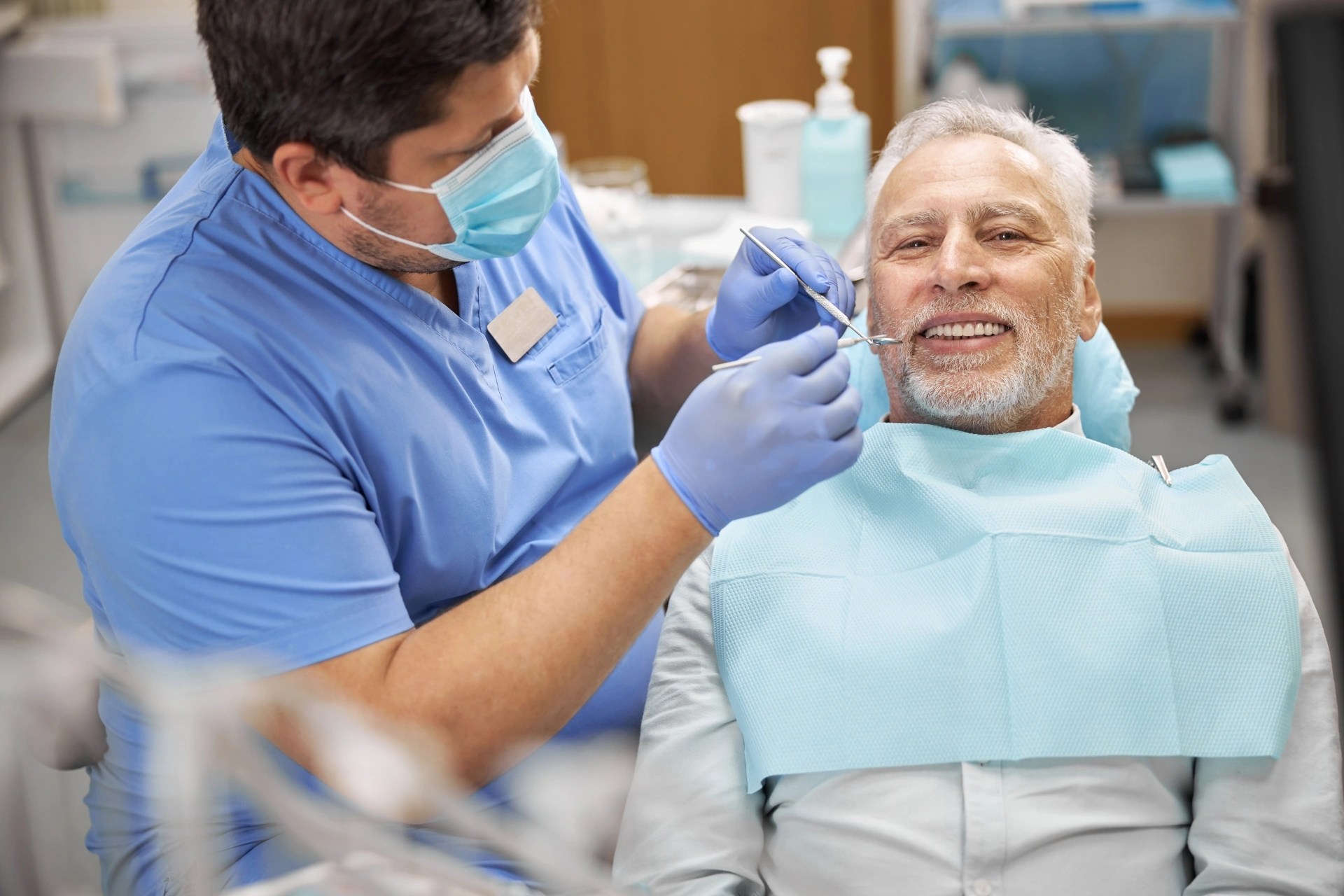
Dental implants for seniors can be a useful way to replace missing teeth or provide better support for a denture. Many older adults aren’t looking for anything complicated. They simply want to eat more comfortably, feel confident when they talk, and stop worrying about a loose tooth replacement.
So the better question isn’t, “How old are you?” It’s, “Is your mouth and overall health ready for treatment?” We consider gum health, available bone, medications, diabetes control, smoking, healing ability, and daily oral hygiene. These details tell us much more than age alone when we’re considering dental implants for seniors.
Bone Loss, Bone Grafting, and Older Patients
Bone loss is common after a tooth has been missing for a long time. It can be more noticeable when several teeth have been lost, but it doesn’t automatically rule out implants.
Depending on what we see on your imaging, bone grafting, ridge preservation, a sinus lift, or another preparatory procedure may be recommended. Sometimes the bone is ready right away, while at other times it needs preparation first.
Medical History and Medications Matter
Many older adults take medications or manage health conditions that need to be considered before oral surgery. Diabetes, heart conditions, blood thinners, osteoporosis medications, previous cancer treatment, immune conditions, and smoking history can all affect treatment planning.
That doesn’t mean you’re automatically disqualified. With dental implants for seniors, the goal is to understand the full picture. When necessary, your oral surgeon can also coordinate with your physician before treatment. These are all crucial factors that determine your candidacy for dental implants.
When Someone May Need to Delay Dental Implants
There are times when waiting is the better choice. A teenager may still be growing. Someone with active gum disease may need treatment first. Another patient may need time to heal after an extraction, rebuild lost bone, or get a medical condition under control.
Waiting isn’t necessarily a setback. Sometimes it’s what gives us the best chance of getting the long-term result we’re aiming for. This is especially important when determining the minimum age at which dental implants can be placed.
FAQs
Is there an age limit for dental implants?
There usually isn’t a strict age limit for dental implants. Healthy older adults may still qualify if their oral health, bone health, and medical history support treatment.
What is the minimum age dental implants can be placed?
There is no universal minimum age for dental implants. Treatment is generally considered once jaw growth is complete.
Are dental implants safe for seniors?
Dental implants for seniors can be safe and effective when their health, medications, bone, and gums are carefully evaluated.
Can a teenager get a dental implant?
Sometimes, but most teenagers need to wait until their jaw has finished developing.
What if I have been missing teeth for years?
You may still be a candidate. Your bone will be evaluated, and grafting or another preparatory procedure may be recommended if necessary.
Where can older patients get dental implants in NJ?
Older patients’ dental implant consultations in NJ should include an evaluation of the jawbone, gums, medical history, and surgical needs.
The Right Time Depends on the Patient
Age doesn’t tell the whole story. A younger patient may need to wait for jaw growth to finish, while an older adult may still be a very good implant candidate. What matters is whether the mouth and body are ready for treatment.
Book a consultation with us to evaluate your jawbone, oral health, and medical history. We will help you understand whether now is the right time for implants.
Comments are closed.